Instruction

University Libraries offers many forms of instruction, from traditional library workshops to working with arhival materials and more! This page is your gateway for requesting library instruction as well as accessing useful resources. More about the University Libraries instruction teams below. 

At the University Libraries, we scaffold library instrucion so that students acquire the appropriate skills and knowledge at the right time in their educational career. For 100-2000 level library instruction, we focus on foundational library skills and an introduction to information literacy. For 300-400 level we expand students' information literacy with more specific concepts and focus on disciplinary library skills. Finally, for 500+ level library instruction, we work with students on discplinary research methodologies and nuanced information literacy concepts. 
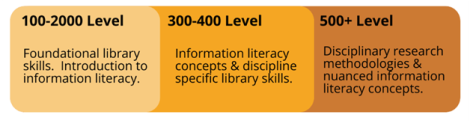
 Graphic showing scaffolding of information literacy concepts in intstruction

Library Instruction Requests

  • Tutorials
    • For all 1000-2000 level courses we have created a suite of robust and interactive tutorials covering the foundational library skills and information literacy concepts appropriate for this level. Each tutorial comes with a certificate of completion which students can turn in for credit.
    • Tutorials can be supplemented with in person Research Clinics, which are 75-miunute sessions held weeks 6 through 11. Students register for one that fits their schedule (first come, first serve) and must bring their assigned research project to work on.
  • 300 - 400 Level and 500+ Level Instruction Request
    • Request a library instruction workshop for your class. After submitted a library instruction request, a librarian will be in touch within 2 business days. If you don't hear from someone within that timeframe, please email Amy Jankowski at Email Contact
  • Center for Southwest Research Instruction Request  (All levels)
    • Librarians in the Center for Southwest Research and Special Collections welcome opportunities to give presentations on the basics of primary source research as well as historical topics represented in our collections. Please note: the maximum class size we can accommodate is 25.

Resources